Harvesting and seasonal farm work is one of the most accessible ways for students to earn money during the summer and fall in the United States in 2026. From apple and cherry orchards in Washington and Michigan, to berry farms in Oregon and California, pumpkin and vegetable harvests across the Midwest, and grape harvests in California and New York wine country, American agriculture relies on seasonal harvest workers. The work requires no prior experience, pays at or above minimum wage (often with piece-rate bonuses), and is widely available across rural America. For domestic students it is a straightforward seasonal option; for international students, important work-authorization rules apply that must be understood first. This complete guide covers the pay, seasons, work rules, required qualities, benefits, and exactly how to find and apply.
💵 Pay & Earnings (2026)
Typical Hourly Pay (Harvest Roles)
$14–$20 / hour
Indeed · state farm boards · June 2026
Piece-Rate / Bonuses
Often Added
per bin / pound / crate picked
Berries / Soft Fruit
May–Aug
summer break work
Apples / Orchard
Aug–Oct
fall harvest
Grapes (Wine Country)
Aug–Oct
CA & NY regions
Pumpkin / Vegetable
Sep–Nov
Midwest & nationwide
Harvest pay must meet at least the applicable federal or state minimum wage (whichever is higher many states set rates well above the federal floor), and in practice harvest roles often pay in the $14–$20/hour range, varying by state, crop, and employer. Many farms add piece-rate pay (per bin, pound, or crate picked) on top of or in place of an hourly base, which lets fast pickers earn more. Some seasonal roles offer on-site or low-cost housing and meals, which stretches a student’s earnings during the summer. Pay and conditions vary widely between small local farms and larger operations, so confirm the wage structure (hourly vs piece-rate), hours, and any housing before accepting.
🛂 Work Rules: Important for International Students
US citizens and permanent residents can take seasonal harvest work freely (subject to any age/labor rules). For international students on an F-1 visa, harvest work is generally NOT straightforwardly available, and this is the most important thing to understand. F-1 work authorization is limited to on-campus employment and specific off-campus categories (CPT and OPT) that must be directly related to your field of study and authorized in advance. Off-campus seasonal farm/harvest work is typically NOT permitted on an F-1 visa unless it somehow qualifies under these narrow categories (which harvest work almost never does, as it is rarely related to a student’s field of study).
This means that for most F-1 international students, off-campus harvesting is not a legal work option. Some campuses operate teaching/research farms or agricultural programs where related on-campus work (or a field-of-study CPT placement for agriculture students) might be possible those would be the rare authorized routes. Separately, US agriculture’s seasonal labor is often filled through the H-2A temporary agricultural worker visa, which is an employer-sponsored route for foreign workers coming specifically to do farm work this is a different pathway from being an F-1 student, and is not something a current F-1 student switches into casually.
The bottom line: if you are an F-1 international student, do not take off-campus harvest work assuming it is allowed it generally is not. Consult your university’s international student office and Designated School Official (DSO) before any off-campus work, and focus on authorized on-campus roles (which may include campus farms or agricultural facilities) for legal seasonal income. Unauthorized work has serious immigration consequences.
💡 F-1 Students: Off-Campus Harvest Work Is Generally NOT Allowed
F-1 work is limited to on-campus jobs and field-of-study-related CPT/OPT off-campus harvest work almost never qualifies. Seasonal US farm labor is usually filled via the separate H-2A agricultural visa (an employer-sponsored route), not by F-1 students. If you’re on an F-1 visa, look for authorized on-campus work (including campus farms/ag facilities) and always consult your DSO first. US citizens and permanent residents can do harvest work freely.
🌍 Who Harvest Work Suits and How It Helps
For domestic students (citizens and permanent residents), harvest work is an excellent seasonal option because it concentrates in the summer and fall when most students have breaks and can work intensively. Rather than fitting hours around classes, a student can take a focused block of seasonal farm work, earn a meaningful sum, and return to studies. The seasonal rhythm aligns naturally with the academic calendar, and the variety of crops across the country means work is available across many months by following the harvest.
The barrier to entry is genuinely low. Harvesting requires no prior experience and no qualifications farms hire based on willingness to work, physical ability, and reliability, and train pickers quickly. For students new to the workforce, this accessibility makes harvest work one of the easiest jobs to obtain, and the clear, physical nature of the work means you become productive quickly. Many roles offer on-site or low-cost housing, which can make a summer of farm work financially worthwhile.
For international students, as covered above, off-campus harvest work is generally not an authorized option on an F-1 visa so the realistic path to seasonal income is authorized on-campus work, which on some campuses includes teaching/research farms or agricultural facilities. Agriculture-program students may, in specific cases, access field-of-study-related placements through CPT. The key is to work only within your authorization and to verify any role with your DSO before starting.
For those who can do it legally, harvest work is healthy, outdoors, and straightforward, builds a reliable work record and references, and offers honest earnings during a break alongside a community of fellow seasonal workers. While physically demanding, many students find it a refreshing change from study and a genuine experience of rural American agriculture.
⚡ Types of Harvest & Seasonal Farm Roles
Common Harvest Work
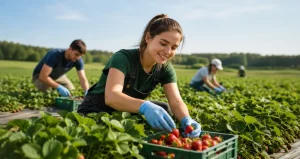
Berry and soft-fruit picking (strawberries, blueberries, raspberries) runs through summer, ideal for the break. Apple and orchard harvesting peaks in fall in regions like Washington, Michigan, and New York. Grape harvesting in California and New York wine country runs late summer into fall. Pumpkin and vegetable harvests span the Midwest and nationwide into autumn. Beyond picking, packing, sorting, and farm-stand roles support the harvest. Each crop and region has its own season, so by following the US harvest calendar berries in summer, tree fruit and grapes into fall eligible workers can find seasonal work across several months.
Qualities Employers Value
Harvest employers value physical stamina above all the work involves long hours outdoors, bending, lifting, and repetitive motion in heat or variable weather, so reasonable fitness and resilience are essential. Reliability (showing up early and consistently through the season) is highly valued, as harvests are time-sensitive. Speed and consistency in picking matter, especially where piece-rate pay applies. Teamwork and a positive attitude help in the communal work environment. No special education or English level is required instructions are easily learned but willingness to follow guidance and work hard is what employers seek. Be honest with yourself about the physical demands before committing.
📋 Eligibility & Requirements
1
Work Authorization (Critical for International Students)
US citizens and permanent residents can do harvest work freely. F-1 international students generally CANNOT do off-campus harvest work F-1 authorization is limited to on-campus jobs and field-of-study-related CPT/OPT, which harvest work rarely fits. Seasonal farm labor for foreign workers is usually handled through the separate H-2A agricultural visa, not F-1 study. If you are an F-1 student, look for authorized on-campus roles (including campus farms) and always consult your DSO before any off-campus work. Never assume harvest work is allowed on an F-1 visa.
2
No Experience or Qualifications Required
For those authorized to work, the vast majority of harvest roles require no prior experience, no qualifications, and no certification. Farms provide on-the-job instruction and hire based on willingness, physical ability, and reliability. This makes harvesting one of the most accessible seasonal jobs. A strong work ethic and readiness for physical outdoor work matter most. Note some roles have minimum age and youth-labor rules in agriculture.
3
Physical Fitness for Outdoor Work
Harvesting is physically demanding long hours of bending, lifting, and repetitive picking outdoors, often in heat. Reasonable physical fitness and resilience are essential, and proper clothing, sun protection, and hydration are important for working safely. Be honest with yourself about the demands before committing, particularly for fast-paced, piece-rate harvests.
4
Seasonal Availability & Travel to Rural Areas
Harvest work is concentrated in specific seasons and located in rural farming regions, so availability during the relevant season (often summer/fall breaks) and willingness to travel to or stay near the farm are needed. Many farms offer housing, which helps. Plan around the harvest calendar and your breaks to make the most of the opportunity.
🎁 Benefits & What You Gain
💵
Solid Seasonal Income With Piece-Rate Upside
Harvest work pays at or above minimum wage, with piece-rate bonuses on many farms that reward fast pickers honest earnings during summer/fall breaks, often boosted by free or low-cost housing.
🌅
Fits Summer & Fall Breaks
Concentrated in the warmer months, harvest work lets students earn intensively during breaks without affecting their studies a focused, well-paid block of seasonal work.
🌱
Accessible, Healthy & Outdoor
No experience needed, active outdoor work, and a team environment make harvesting an easy first job for those authorized a refreshing change from study and a taste of rural American agriculture.
💪
Work Record & References
Reliable seasonal work builds a work record and references that help with future jobs, and the structured, physical nature of the work develops a strong work ethic valued by all employers.
📨 How to Find & Apply
International Students: Start With Your DSO & On-Campus Options
If you are an F-1 student, your first step is your international student office / DSO confirm what work you are authorized for. Since off-campus harvest work generally is NOT permitted, focus on authorized on-campus roles (including campus farms or agricultural facilities, where they exist) for legal seasonal income. Agriculture students should ask whether a field-of-study CPT placement is possible.
Domestic Students: Search Indeed & State Farm Boards
If you are authorized to work (citizen/PR), search Indeed for “harvest worker,” “farm worker,” “fruit picker,” and your crop/state. State agriculture department job boards, local farm listings, and university agricultural extension offices are great sources. Apply early popular harvests fill before the season.
Apply Directly to Farms & Confirm Wage/Housing
Contact local farms, orchards, and vineyards directly many recruit seasonal helpers each year. A simple application stating your availability and willingness to do physical work is enough; experience is rarely required. Confirm the pay structure (hourly vs piece-rate), hours, and whether housing/meals are provided before accepting.
Verify Authorization & Avoid Scams
International students must not take off-campus harvest work without confirming authorization with their DSO it generally is not permitted on F-1. Apply only through legitimate channels and verified farms, never pay for a job or “placement,” and be wary of offers demanding upfront fees or promising visa sponsorship for casual harvest work. A legitimate employer pays at least minimum wage and never charges you to be hired.
Search & Resources:
📅 Season
May–Nov (peak)
💼 Type
Seasonal · Full-time
📊 Experience
None Required
🌾 Seasonal Harvest Income For Those Authorized to Work
For citizens and permanent residents, harvest work offers accessible, well-paid seasonal income with piece-rate upside and housing perks. F-1 international students should note off-campus harvest work generally is NOT permitted focus on authorized on-campus roles and always consult your DSO first.





Be First to Comment